
2nd July 1918.
Today is a date in the year which was come to mean a lot to me.
My great uncle, Joseph Griffiths, was killed in action at Aveluy Wood in France. He was 19. His gravestone is inscribed:
"YR ARGLWYDD YW FY MUGAIL NI BYDD EISIEU'ARNAF"
(Psalm 23: "The Lord is my Shepherd, I shall not want")
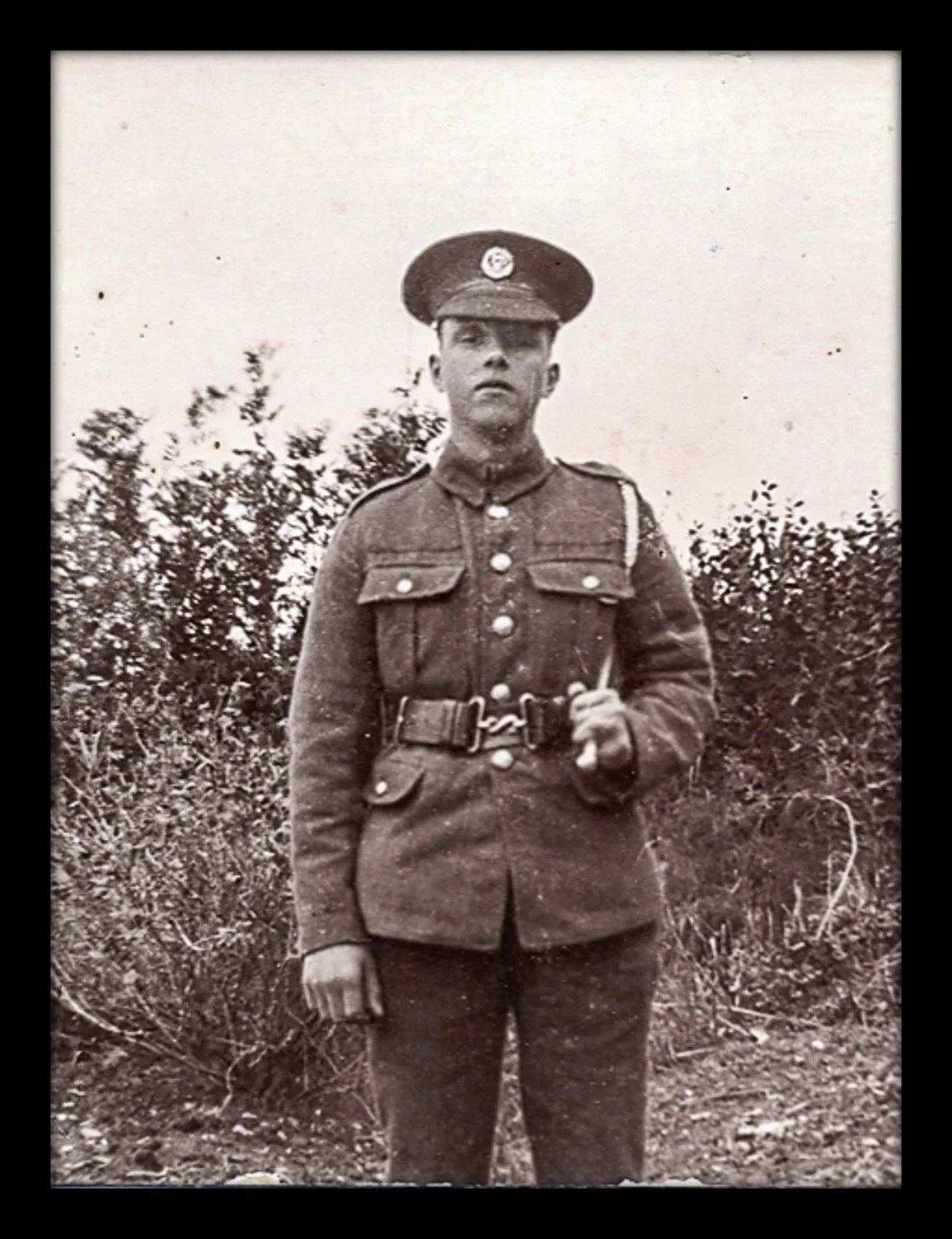
73269 Private Joseph Griffiths - 2nd Battalion, Royal Welch Fusiliers
Joseph had grown up in Llechryd, a small village near Cardigan and was serving with the 2nd Battalion Royal Welch Fusiliers. His brother David, my grandfather, also served, with the 12th Battalion Royal Fusiliers.
I've spent the last year trying to piece together their war. In honesty, I don't really know why. It simply seemed the right thing to do, and it has absorbed me.
I don't have all the records. Joseph's military records were likely destroyed in WW2. But I was fortunate that two soldiers in Joseph's battalion wrote accounts of their service that became the backbone of my research: “The War the Infantry Knew” by the medical officer Captain J.C. Dunn and “Old Solders Never Die” by Private Frank Richards.
I also worked with what I could find, including medal records and war diaries from the The National Archives, burial records from the Commonwealth War Graves Commission, and a newspaper article my father gave me that quoted a letter Joseph had sent home.
In that letter, Joseph wrote that he'd lost his mate Private Edwin Gregory, the "only one from Cardigan who was with me.".
I looked Edwin up to discover that his service number was one different to Joseph's and that he was killed at Passchendaele in November 1917, one of the most terrible battles of the war.
The service numbers and letter suggest they served together which means Joseph was probably in action in November 1917. My research on David suggest he was shot through the shoulder in June 1917 shortly after the Battle of Messines, perhaps at Battle Wood. Wounded badly enough to be sent home, David survived earning the Military Medal but living with a damaged shoulder for the rest of his life.
The poignant thought is that as one brother left France with a life-changing wound, the other was just about to see action, only to be killed in the last months of the war.
The research absorbed me in the same way my best work does. Incomplete information. Different sources. Fragments that don't obviously connect. My ambition was to work out how it all fitted together to build the most plausible picture of Joseph's war.
That's true of financial information too. It's often incomplete. It tells you what happened but rarely why. The explanation often sits somewhere else, in sales, operations, or people and understanding a business means bringing those fragments together before deciding what conclusion the evidence supports.
When I think about David's wound sending him home, I'm always reminded that without it, I may not be here to tell Joseph's story.